
GeoEconomics
Geoeconomics turns global volatility into decision-ready insight.
GeoEconomics matters because the global system is still integrated, but it’s now being actively reshaped by strategic competition.
Policy is driving markets more directly than before. Industrial policy, subsidies, export controls, and investment screening are now major determinants of where capital, technology, and production flow.
Fragmentation has real macro costs. Geoeconomic fragmentation can materially reduce global output making “where and with whom you trade” a core growth question.
Trade momentum is uneven and more fragile. Trade deceleration raises exposure for firms and countries relying on stable cross-border demand.
Critical-mineral and technology supply chains are concentrated. High refining concentration in strategic minerals, and recent developments show governments treating those dependencies as national-security issues.
In practical terms: geoeconomics is no longer a “macro backdrop.” It is the operating environment for strategy, risk, pricing, and competitiveness.
Below are a few projects I am tracking due to their critical importance.
De-dollarization is a growing strategic threat: as countries build alternatives to dollar-based trade and payments, U.S. financial leverage and sanctions power can erode faster than most institutions are prepared for. If this shift accelerates, governments and companies that fail to monitor it in real time risk higher funding costs, weaker crisis resilience, and sudden exposure to a fragmented global financial system.
De-Dollarization
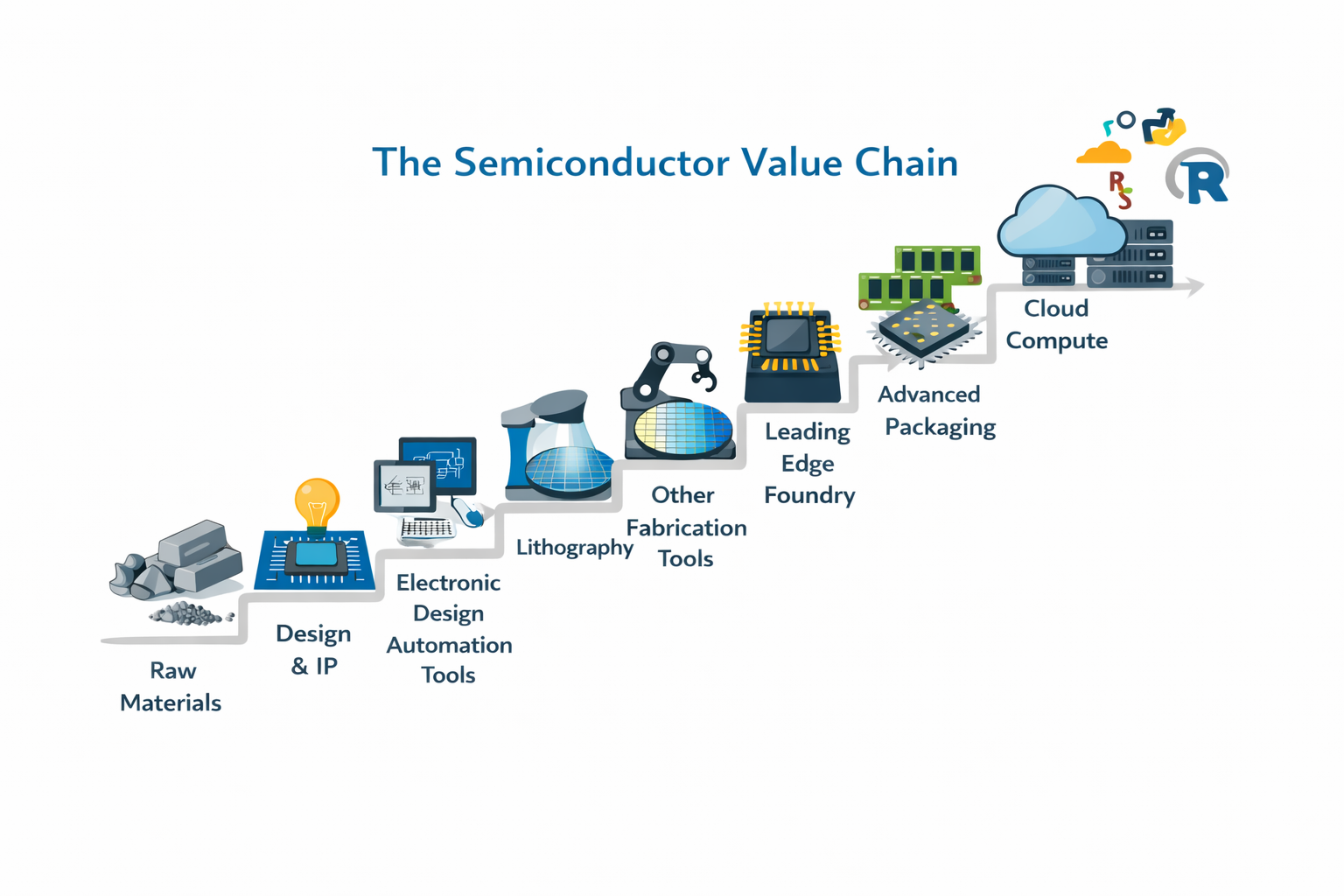
The semiconductor value chain is now a frontline geopolitical battleground, where a disruption in one chokepoint can stall industries, weaken military readiness, and destabilize national economies. As competition over advanced chips intensifies, organizations that lack real-time visibility into supply, tooling, and packaging dependencies risk being blindsided by shortages, export controls, and cascading system-wide failures.
Semi-Conductor Value Chain
In a geoeconomic environment—tariffs, sanctions, export controls, shipping disruptions, energy shocks, currency swings—consumer and industrial demand can reprice quickly by region and sector. Strong demand forecasting helps you detect those shifts early, reallocate capital and inventory faster, and avoid turning geopolitical volatility into avoidable financial losses.